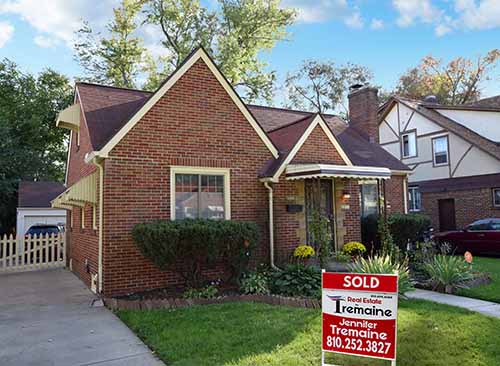
“No.” Short answer. End of story. Quit reading now.
Still reading? Then I have a more complicated answer: “It depends.”
People successfully sell homes in Fenton without a Realtor every year. The industry term is FSBO or “for sale by owner.” Some handle everything themselves. Others bring in a Transaction Coordinator to manage paperwork once they find a buyer.
Before we talk about that option, let’s be honest about what selling without a Realtor really looks like.
The Pros of Selling Without a Realtor
1. You save on commission.
This is the biggest reason people consider it. If you do not hire a listing agent, you avoid paying that portion of the fees.
2. You control the process.
You set the schedule. You handle showings. You communicate directly with buyers.
3. You negotiate directly.
Some sellers prefer having conversations face to face rather than working through an intermediary.
4. Flexibility.
You can decide how much help you want and when. Some sellers hire professionals à la carte.
Now let’s talk about the other side.
The Cons of Selling Without a Realtor
1. Pricing can be tricky.
Overprice and you sit. Underprice and you leave money on the table. Accurate pricing requires analyzing comparable sales, market trends, when to raise or lower your price, and buyer behavior.
2. Negotiation gets complicated.
It is rarely just about price. Inspection repairs, timelines, appraisal gaps, closing costs, financing terms. In my experience, this is where deals either succeed or fall apart (I can’t tell you the number of times a deal almost fell apart the day before the sale).
3. You are responsible for screening buyers.
Pre approval letters are not all equal. Verifying lender strength and buyer qualification takes experience. A Realtor insures that only qualified buyers see inside your home.
4. Legal exposure.
Disclosure requirements, deadlines, contract contingencies. One missed detail can become expensive.
And one very important note. All fees in real estate are negotiable before you sign a contract. Commission structures, services offered, even marketing approaches. Nothing is set in stone until you agree to it in writing. Many sellers do not realize that.
Now let’s talk about Transaction Coordinators.
In addition to being a Realtor, I also serve as a Transaction Coordinator for certain clients. A Transaction Coordinator is a licensed real estate professional who does not represent either party. They simply handle the paperwork and make sure deadlines and documentation are completed properly.
This can work beautifully in very specific situations. For example, if you are selling your home to your child, sibling, or close friend, and you have already agreed on a price, and they are truly qualified, and trust is strong, I can step in to manage the transaction paperwork for a much lower fee.
On paper, it sounds simple. But here is where it becomes complicated.
Negotiation is almost always the most difficult part of a real estate transaction. Even between family members. Even between friends.
I once had a seller interview six agents before choosing me. Shortly after listing, he told me he had found his own buyer. A good friend. They had already agreed on price. He asked me to step down as his agent and act only as Transaction Coordinator.
Again, it sounded easy. However, the transaction took over four months and cost him more than eighteen thousand dollars.
Here is what happened.
The buyer said he was qualified. He was not. The closing was delayed. Meanwhile, the seller had already committed to purchasing a home out of state. He had to close on that property with a larger loan because he temporarily owned two homes.
As Transaction Coordinator, I could not negotiate on his behalf. I could not vet the lender. I could not push underwriting. I could not attend inspections in a representative role. My job was strictly administrative. Because he had already moved, he had to hire an attorney locally to assist with negotiations.
Due to delays tied to the buyer’s insufficient credit, the seller made three additional mortgage payments, plus taxes and utilities. To get the deal to the finish line, he ultimately paid the buyer’s closing costs.
When we added it all up, his out of pocket cost was more than double what my commission would have been.
That does not mean selling without a Realtor is wrong. It just means you must clearly understand what you are taking on.
A Transaction Coordinator works well when you personally select a buyer you know well enough to trust their finances, their lender, and their commitment. You must also be comfortable handling negotiations, inspections, and buyer qualification yourself.
Can’t I just hire an Attorney?
When people decide not to hire a Realtor or a Transaction Coordinator, the next question is usually “Can’t I just hire an attorney?” All serve very different roles.
A Transaction Coordinator is a Realtor who manages the paperwork and timeline of a deal. They track deadlines, prepare documents, coordinate with title companies and lenders, and make sure required disclosures are completed. What they do not do is represent you in negotiations or give legal advice. Their role is administrative. The benefit is cost. It is typically far less expensive than full representation, and if you already have a solid buyer and clear terms, it can keep things organized and on track. The downside is that you are still responsible for pricing, negotiating repairs, evaluating the buyer’s financing strength, and solving disputes if they arise.
A real estate attorney, on the other hand, is licensed to provide legal advice and draft or revise contracts. They can interpret complex clauses, protect you in the event of a dispute, and represent you if something goes wrong. If you are dealing with unique circumstances such as land contracts, boundary issues, estate sales, title defects, or a contentious buyer, an attorney brings legal protection that a Transaction Coordinator cannot provide. The tradeoff is that attorneys do not manage showings, buyer screening, inspection logistics, appraisal coordination, or day to day transaction flow. Their involvement is legal, not operational.
In my experience, the right choice depends on the situation. If you have a straightforward agreement with a well qualified buyer and simply need help managing documents, a Transaction Coordinator can be efficient and cost effective. If there is complexity, uncertainty, or potential conflict, an attorney provides a deeper layer of protection. And sometimes, depending on the deal, using both can give you the balance of organization and legal security that makes everyone sleep better at night.
Bottom Line
So do you need a Realtor to sell your house? No.
But in my experience, the real question is not whether you can a house in Fenton yourself. It is whether you are prepared to manage the pricing, negotiation, risk, and moving parts that come with it.
That is a decision worth thinking through carefully. Every situation is different. Give me a call, we can discuss your options, and I’ll help you decide what is right for you.